SK
Official website of the
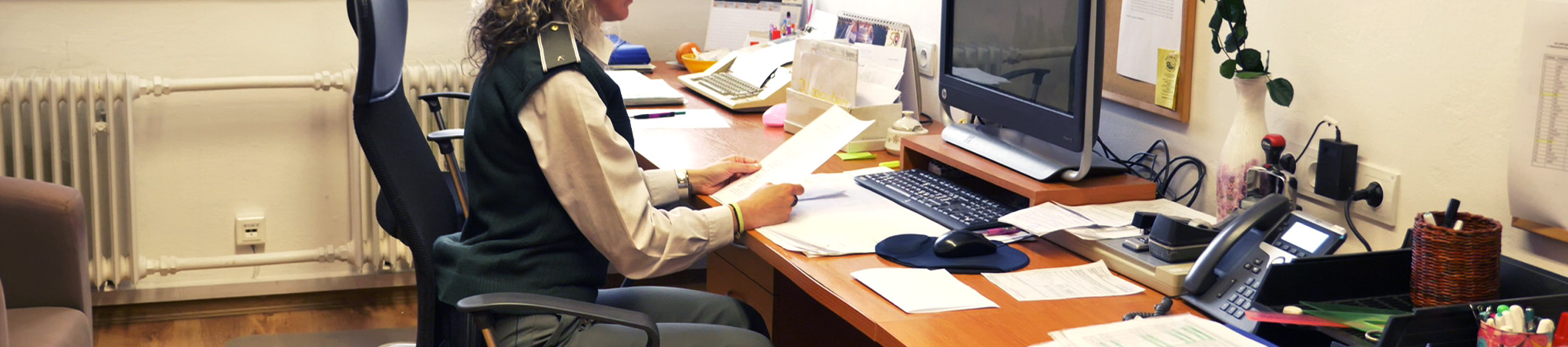
Working as a prison officer of the Corps of Prison and Court Guard (ZVJS) means ensuring order, security, and supervision in prisons, court facilities, prosecutor's office facilities, and their vicinity. Prison officers of the ZVJS oversee the maintenance of order and safety in the facilities, whether for remand prisoners, sentenced prisoners, persons entering these facilities, or for prison facility employees. In addition, they assist in the resocialization of sentenced prisoners so that they can best integrate into society after their release. Working in the ZVJS is demanding, but it brings stability, the possibility of career growth, and an important mission within the security and justice of the state.
Age 18 years or older
At least full secondary education with a school-leaving certificate
Medical, physical, and mental fitness
Proficiency in the state language
Responsibility and reliability
Integrity
Permanent residence in the territory of the Slovak Republic
Full legal capacity
Non-partisanship
Prohibition of other gainful activities as of the date of admission (exceptions are stated in Section 48, Paragraph 7 of Act No. 73/1998 Coll., as amended)
Completion of an informative interview – provision of basic information on the conditions of admission and the recruitment process, conditions of state service, information on vacant functional positions
Completion of a personal interview before the advisory body of the institution
Completion of state language proficiency tests
Completion of physical fitness tests
(the above-mentioned activities are usually provided in one day)
Completion of a psychological examination
Completion of an entry medical examination
Notification of the applicant about the result of the recruitment process
Guard of the judicial guard section of the security department - Ensuring the protection of order and safety in court buildings, prosecutor's office buildings, the building of the Judicial Council of the Slovak Republic, and other buildings designated by the court or prosecutor's office for proceedings and ensuring the undisturbed conduct of proceedings therein.
Independent guard of the guarding activities section of the security department - Independent professional activity in the field of ensuring the guarding of the given institution's premises. (uneven distribution of duty time (day and night shift) per week with a bonus for unevenness)
Case manager of the regime activities section of the remand detention and prison sentence execution department and open unit – Independent regime activity in dealing with prisoners, ensuring activities within the daily schedule and activities to secure the rights of prisoners.
Independent guard of the escort and special activities section of the security department - Independent professional activity in the field of ensuring and performing the escort of remand prisoners in remand detention and sentenced prisoners in prison sentence execution to court hearings, to workplaces outside the official office, and to civilian medical facilities.
Every prison officer is assigned to the so-called preparatory state service, during which they must obtain police education. This training is divided into two parts: basic professional and specialized professional training. This is provided at the Institute for Education of the Corps of Prison and Court Guard in Nitra. The curriculum is scheduled over 10 weeks. The curriculum also includes practical training, and final examinations are held at the end.
After successfully completing police education, depending on the type of position, a prison officer may undergo further specialized training:
Socio-psychological training
Communication training
Specialized course for court guard
Dog handler course
Specialist dog handler course
Preventive and security service course
Shift supervisor course
Regime officer course
Shooting and professional training instructor course
Detention course
Specialized course for forensic technical activities of prison officers
Every recruited prison officer is required to undergo a physical fitness test, with the exception of women who have reached the physical age of 40 years or more, and men aged 50 years or more. A citizen who meets the physical fitness requirements set by the ministry is considered physically fit.
The test consists of:
12-minute run (so-called Cooper test)
100/50m run
Pull-ups on a horizontal bar
Shuttle run
Standing long jump
Sit-ups
The performance of the tested prison officers achieved in individual disciplines is evaluated according to the points in the scoring tables specified in the internal regulation.
No.
No, a prison officer may not earn extra income alongside the performance of state service; therefore, they may not hold any other paid position, carry out business activities or other gainful activity, or be a member of the management or supervisory bodies of legal entities engaged in business activities, except for exceptions specifically provided by the Act, which define the areas of permitted other gainful activity (Section 48, paragraph 7 of Act No. 73/1998 Coll. as amended).
Permitted gainful activities include, for example, the provision of healthcare in medical facilities, the performance of personal assistance, scientific activity, pedagogical activity, lecturing activity, presentation activity, pastoral activity, journalistic activity, literary activity, sports activity or artistic activity, expert witness activity, interpreting activity, translation activity, the activity of camp leaders for children and youth, the administration of one's own property, and other activities defined by the Act (Section 48, paragraph 7 of Act No. 73/1998 Coll. as amended).
It consists of two parts:
Test A: is focused on determining the level of proficiency in the orthographic standard of the state language
Test B: is focused on verifying the general level of proficiency in the Slovak language and literature, the applicant's linguistic culture, and their ability to express themselves stylistically correctly
A prison officer may have tattoos. There are no fundamental restrictions (derogatory words/depictions in visible areas are not acceptable in the Corps). For certain positions, earrings and piercings must be removed during duty for safety reasons.
The duration is individual from one to three months after successfully passing the individual parts of the recruitment process in accordance with Act No. 73/1998 Coll.
It also depends on the candidate's responsiveness during the individual processes.
Recruitment allowance of €5000
Housing allowance – amount depends on the region
Job security and regular income (even during sick leave and nursing care leave)
Salary min. €1522 - €1742 (depending on the region)
Support for further education and career growth
Possibility of rehabilitation and recreation in our facilities
Healthcare
Vacation of 6 - 7 weeks regardless of age
Special social security
Provision of meals
Possibility of accommodation – provision of housing in a dormitory or potential assignment of an official apartment to bridge the period in case of temporary need
Responsibility and reliability
Integrity
Assertiveness
Non-violent communication
High degree of integrity
Flexibility
Non-confrontational approach
Team spirit – teamwork
Confidentiality
Impartiality
Disciplined
Prison officers are provided with so-called preventive rehabilitation lasting 14 days per year to support physical and mental health. Preventive rehabilitation consists of a set of medical-preventive, sports-educational, and work measures aimed primarily at strengthening and consolidating physical and mental health.
Family recreational stays in medical-rehabilitation facilities are organized during the spring break, Easter, summer holidays, or New Year's Eve.
The organization of residential summer camps for children of prison officers is also a popular and utilized activity.
Children's Day – As part of supporting work-life balance, the Corps of Prison and Court Guard also creates space for informal meetings of employees and their families. On the occasion of Children's Day, individual prisons independently organize various activities for employees' children – from trips to amusement parks to fun afternoons full of games, competitions, and accompanying programs. These events strengthen community spirit and contribute to a positive working atmosphere.
Corps Day – The celebration of the Corps Day serves as an opportunity to support team spirit, strengthen relationships among colleagues, and express appreciation to prison officers and employees for their work. Part of the event includes joint activities that contribute to strengthening the team and building a positive working atmosphere.
Training is an educational activity aimed at acquiring and improving the theoretical knowledge and practical skills of prison officers. Training consists, for example, of shooting practice or self-defense.
Shooting practice: Prison officers are divided into four training groups according to their functional assignment. Each training group has customized shooting exercises, which consist of individual shooting training and evaluation shooting exercises that must be passed with a "satisfactory" rating for their specific performance of duty.
Self-defense: It consists of a set of specific elements intended for the successful handling of a service intervention with regard to the safety of the intervening prison officers and the person against whom the intervention is directed. The purpose of self-defense is also to teach them how to use specified coercive measures in accordance with Act No. 4/2001 Coll. on the Corps of Prison and Court Guard, as amended.
Regular communication with prisoners with varying degrees of recidivism can be a challenge for many. Also, regular communication with the public (when performing official duties in the field of court guard).
Open communication towards a supervisor and vice versa, as well as with a mentor during the adaptation process, can be helpful in the daily resolution of difficult communication and conflicts.
Although a police officer and a prison officer of the Corps of Prison and Court Guard have common goals in the field of public protection and safety, their tasks and work environments are significantly different:
Police officer: Works directly in the field, where they oversee compliance with the law, prevention and investigation of criminal acts, and ensure public order. They can intervene in various situations – from traffic checks to resolving cases of threats to public safety. Police officers often move in public spaces, intervene in towns and villages, and work in places where the public is directly present.
Prison officer: Works predominantly in enclosed areas of prisons or remand prisons, where they ensure order, security, and supervision of persons in remand detention or prison sentence execution. Their task is not only to oversee compliance with rules but also to support the resocialization of incarcerated persons so that they can better integrate into society after their release. Prison officers are also in charge of the transport of incarcerated persons and their safety during court proceedings.
The key difference is therefore that a police officer operates within the scope of public safety and crime prevention, while a prison officer focuses on security in prison facilities and resocialization tasks.
On the website www.zvjs.sk we regularly publish job vacancies to which you can respond directly by sending an application and a CV. In some cases, we also publish vacancies on other external portals. If interested, a job seeker can send an application and a structured CV to the email: kariera@zvjs.sk.
For the position in the escort shift, we appoint prison officers who possess the required police education, are physically fit, and demonstrate professional knowledge and practical experience at a high level.
The study program takes place daily during working days from Monday to Friday from 07:00 to 16:00. It is possible to commute home on weekends.
